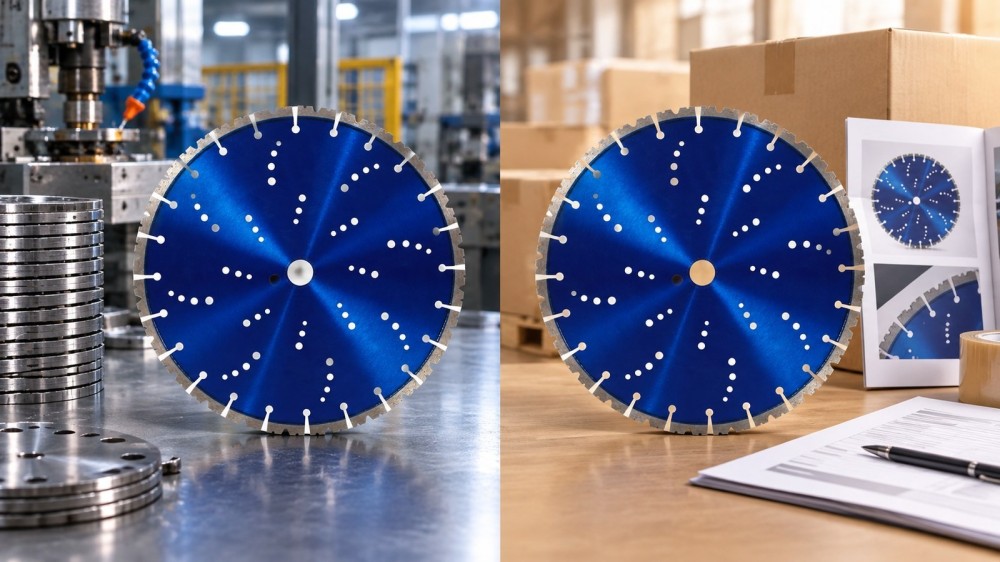
When sourcing diamond saw blades, buyers often ask whether they should work directly with a manufacturer or with a trading company. Both models can provide value, but they are different. Understanding those differences helps importers make better purchasing decisions.
Manufacturer and Trading Company: The Basic Difference
A manufacturer is directly involved in production or manufacturing management. A trading company primarily sources products from one or more factories and handles sales, export and customer service.
The distinction is not automatically a judgment of quality. A strong trading company may provide excellent sourcing and service, while a factory may offer deeper technical control. The important question is whether the supplier can reliably meet your requirements.
When Direct Manufacturing Capability Matters
For customized diamond saw blades, manufacturing knowledge becomes especially important. Buyers may need changes to the steel core, segment design, bond, arbor, blade diameter, color, marking or packaging. A supplier with close control over manufacturing can usually communicate technical requirements more efficiently.
This is also important when troubleshooting. If a blade cuts too slowly, wears too quickly, chips the material or behaves differently on a particular machine, the supplier should be able to discuss the application rather than simply replace one catalog item with another.
Why Product Integration Can Also Be Useful
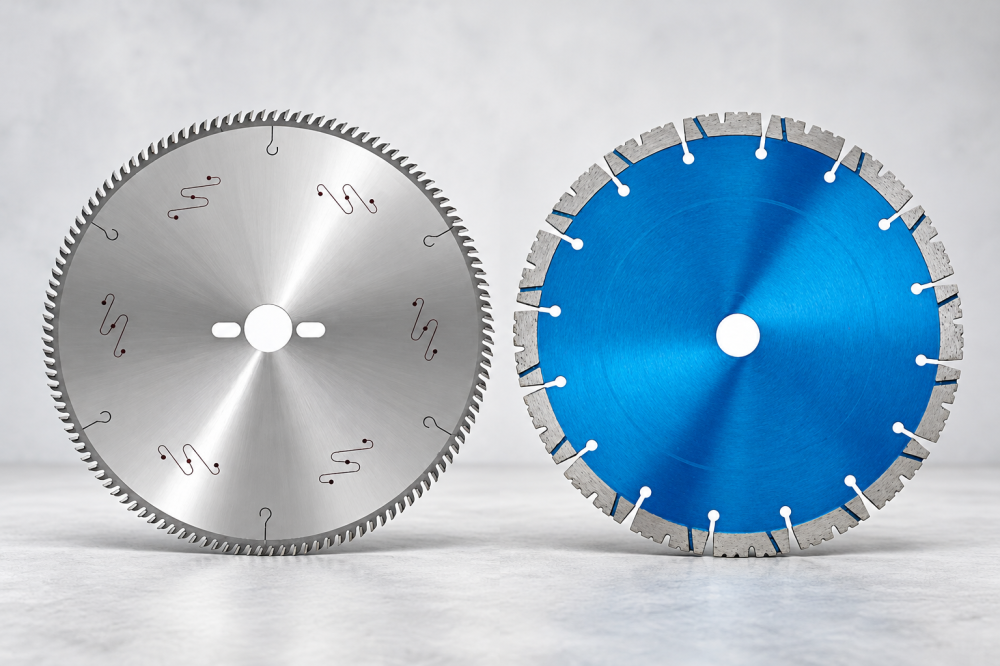
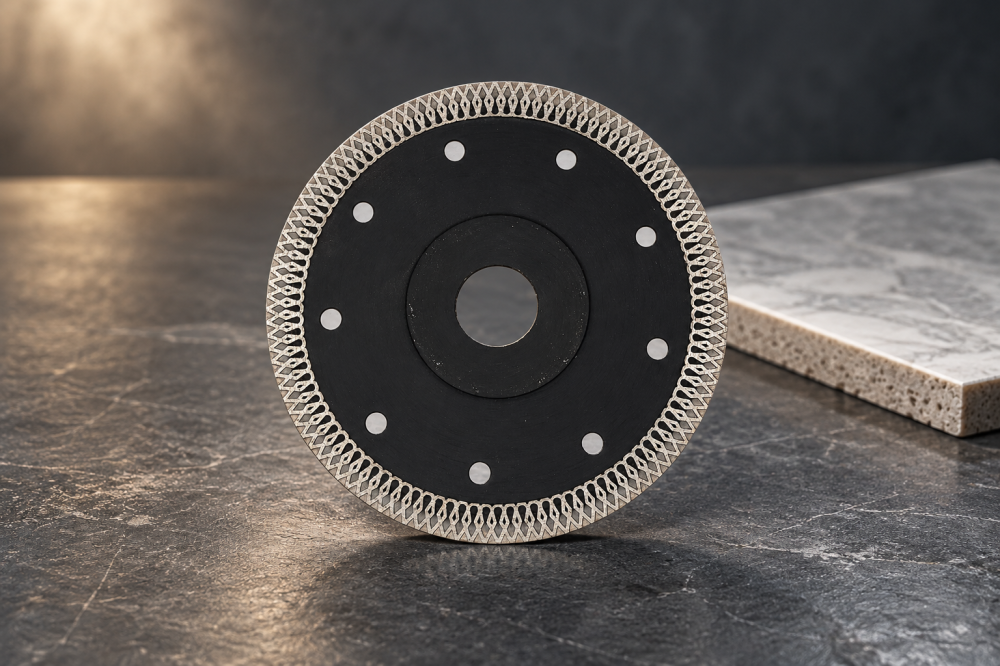
Many international distributors need more than one category. They may purchase diamond saw blades together with cup wheels, core bits, vacuum brazed discs, TCT saw blades and abrasives. A supplier that combines manufacturing capability with an export organization can simplify communication and consolidate product sourcing.
Danyang Etop Tools Co., Ltd. operates with tool manufacturing and import-export capabilities and offers a broad range of cutting and grinding products for international customers.
Questions Buyers Should Ask
Ask who manufactures the products, which processes are handled directly, how quality is inspected, whether OEM orders are supported, how specifications are confirmed and how non-standard requirements are managed.
You can also request product photos, videos, technical data, samples or a video meeting when appropriate.
Do Not Choose by Company Type Alone
A factory is not automatically the right supplier for every order, and a trading company is not automatically a poor choice. Evaluate the actual product, communication, quality system, technical understanding, pricing structure and ability to deliver consistently.
For repeat B2B purchasing, supplier stability and specification control matter more than labels.
ETOP Tools for B2B Sourcing
ETOP supplies diamond saw blades, diamond cup wheels, PCD cup wheels, TCT saw blades, diamond core bits, vacuum brazed diamond discs and abrasives. OEM customization is available for suitable orders.
Tell us your target application, market, dimensions and packaging requirements, and we can discuss an appropriate product solution.
Request a Quote from ETOP Tools
Tell us your target application, blade size, machine, quantity and OEM requirements. Contact ETOP Tools for product recommendations and a quotation.
FAQ
Is buying directly from a factory always cheaper?
Not necessarily. Price depends on specifications, quantity, materials, packaging, service and logistics. Compare like-for-like products.
Why do distributors use suppliers with multiple product categories?
It can reduce communication and purchasing complexity and may allow several related tool categories to be sourced together.
What is most important when choosing a diamond blade supplier?
Product suitability, consistent quality, clear specifications, reliable communication and stable delivery are key factors.